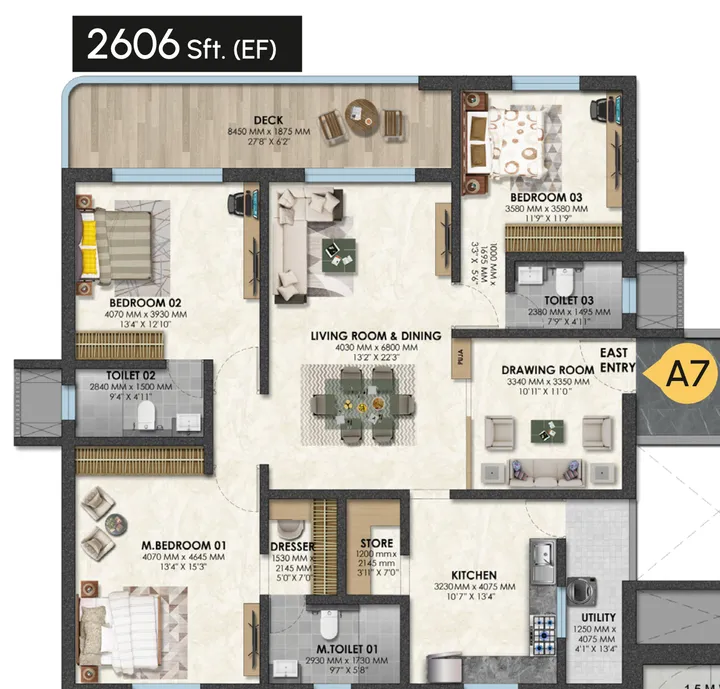
Long-form guide: how to shortlist a Raghava Nova floor plan without regret
Begin with non-negotiables: minimum bedroom count usable as true bedrooms, need for a separate study, frequency of elder parents staying over, and whether you require a show kitchen versus a closed Indian kitchen with aggressive oil management. Rank those needs before you look at facing premiums; otherwise you will overpay for a view that fails daily cooking ergonomics.
Core distance and lift behaviour
On twelve-homes-per-floor plates, the farthest apartment from the core can carry surprisingly long internal corridors that eat into saleable efficiency. Walk the distance mentally from your door to the service lift during furniture delivery scenarios. If the sales gallery shows only one model flat, insist on dimensioned CAD for your exact label.
East versus west in Hyderabad’s climate
West sun can be harsh on balconies and living glass in summer afternoons; east sun can complicate morning glare on bedrooms if you sleep late. Neither is universally “bad”; the right answer depends on your shading strategy, balcony depth, and whether the tower is marginally rotated relative to true cardinal directions.
Service staff circulation
Plans that tuck maid’s toilet and kitchen entry intelligently reduce cross traffic through formal living zones. If you employ full-time help, evaluate whether the staff path crosses children’s study areas or guest sightlines during parties.
Future resale storytelling
Mid and large bands often photograph better for resale listings because of wider living frontage. Compact bands compete on ticket; emphasise efficiency and Financial District pin code when you eventually exit.
Documentation discipline
Save PDF filenames with dates whenever the developer reissues plans. Attach the final plan number to your agreement schedule and store a checksum copy so later interior designers work off the correct revision.
Next step with advisers
When you enquire, name two labels you are comparing and ask for side-by-side commentary on noise, view permanence, and pricing ladders. That specificity yields better answers than a generic “send best plan” request.
Balcony depth and monsoon use
Shallow balconies become storage dumps; deep balconies become usable outdoor rooms. Check slab slope, drain leaf capacity, and whether sliding systems are lift-and-slide for wind pressure at high floors.
Kitchen work triangle versus open plans
Open kitchens photograph well but need powerful hoods and disciplined layouts. Closed kitchens hide operational mess but can reduce perceived volume. Decide based on who cooks daily, not weekend brochure imagination.
Guest bedroom privacy
If you host parents monthly, guest bedrooms near common baths can work; if guests are occasional, you might prefer guest suites farther from master for acoustic separation.
Storage mathematics
Count linear feet of wardrobe wall in each bedroom and compare across labels. Marketing super-built-up numbers rarely tell you whether you will buy extra wardrobes after possession.
Vaastu preferences without self-deception
If kitchen southeast placement matters to your family, mark it explicitly on the plan and confirm with the architect’s note rather than rotating PDFs mentally. Minor rotations can change bedroom labelling relative to true north.
Lift lobby adjacency
Apartments opening directly opposite busy lift groups pick up vibration and chatter. Ask whether acoustic lobby airlocks exist and how thick partition walls are between lift shaft and living spaces.
Sample flat bias
Sample flats often use thinner internal partitions and borrowed ceiling heights from double-height display zones. Ask which walls are structural versus gypsum so you do not assume hackability incorrectly.
Comparing Nova plans with competitors
When benchmarking against another Financial District tower, equalise saleable definitions first, then compare corridor widths, window-to-wall ratios, and AC ledge positions. Only then compare headline price per square foot.
Documentation for interior designers
Export plan PDFs with dimensions visible and share MEP marking layers if the developer provides them. Designers burn hours guessing riser locations when CAD is withheld until late possession handover.
Handicap accessibility and ageing in place
Even if you do not need accessibility today, evaluate door widths, level thresholds at balconies, and whether at least one bath can later accept grab bars without major retiling.
Sound transmission class
Ask whether demising walls between apartments use staggered studs or concrete separation. Lightweight partitions between bedrooms in compact labels can carry neighbour noise more than marketing silence suggests.
Plan stability across revisions
Developers sometimes tweak shaft walls or duct routes between sales phases. Request revision tables from the architect if multiple plan PDF versions float in the market.
Balcony grill policy
Some estates mandate uniform grill geometry for skyline consistency. If you rely on full-height safety screens for children, confirm whether those designs are pre-approved or require committee review post possession.
Work-from-home lighting
Study desks placed against interior walls need artificial lighting plans early; do not assume floor-to-ceiling glass on short walls will suffice for video-call quality.
Ductable AC versus split
If drawings show ductable systems, confirm false ceiling drops required in corridors and bedrooms so you do not lose height unexpectedly during execution.
Puja room or convertible niche
If spiritual practice needs a ventilated niche with storage for lamps and incense, mark whether the plan’s ventilation path conflicts with AC returns or fire dampers.
Window cleaning access
High-floor glazing needs BMU or cradle routes; ask whether your tower’s plan shows anchor points and whether bedroom windows are hopper types that limit future cleaning robot options.
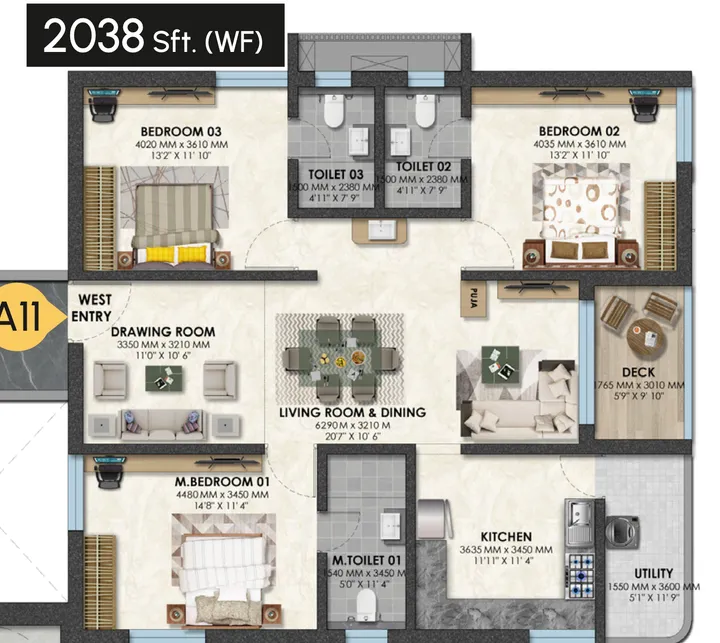
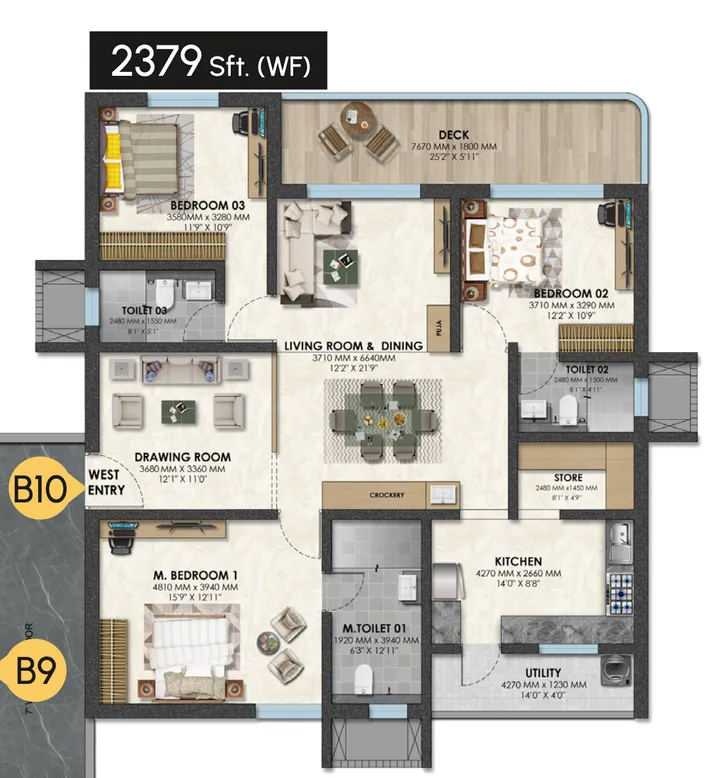
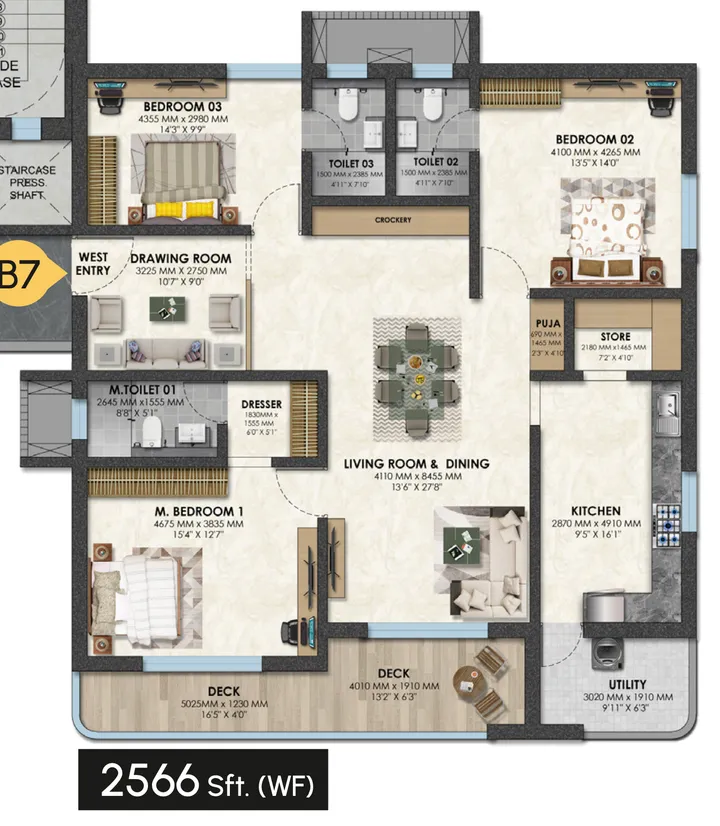
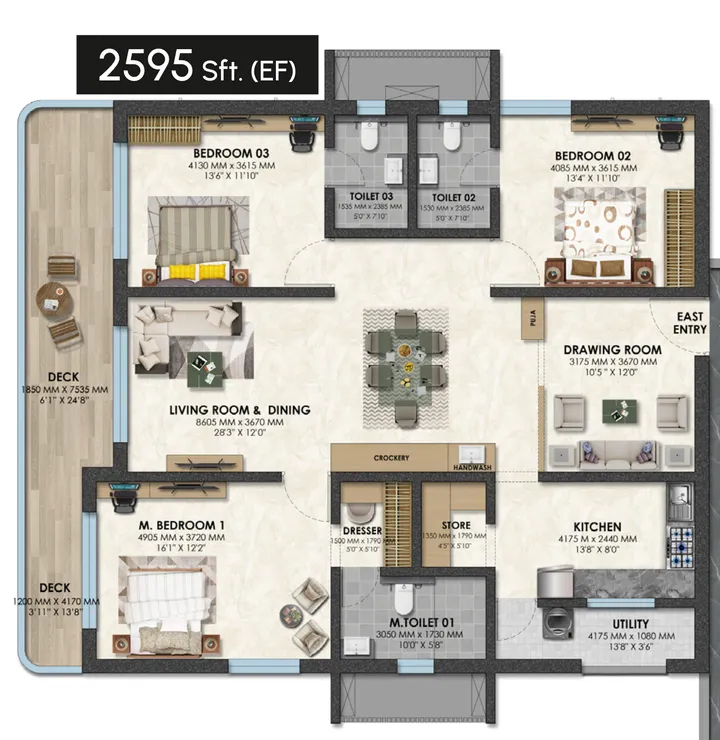
Print one plan per shortlisted label and mark sleeping orientations with a highlighter; the visual discipline prevents impulse swaps during sales-event pressure for clarity.