

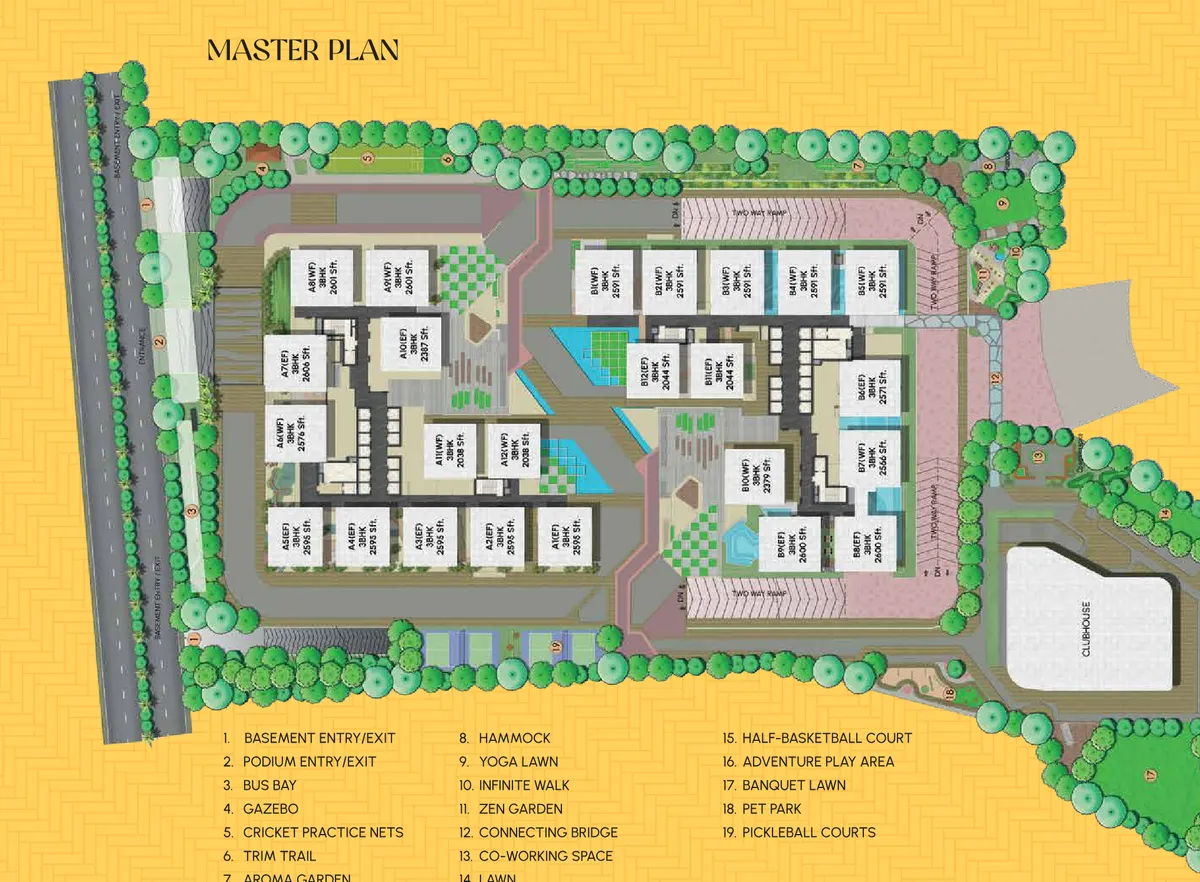
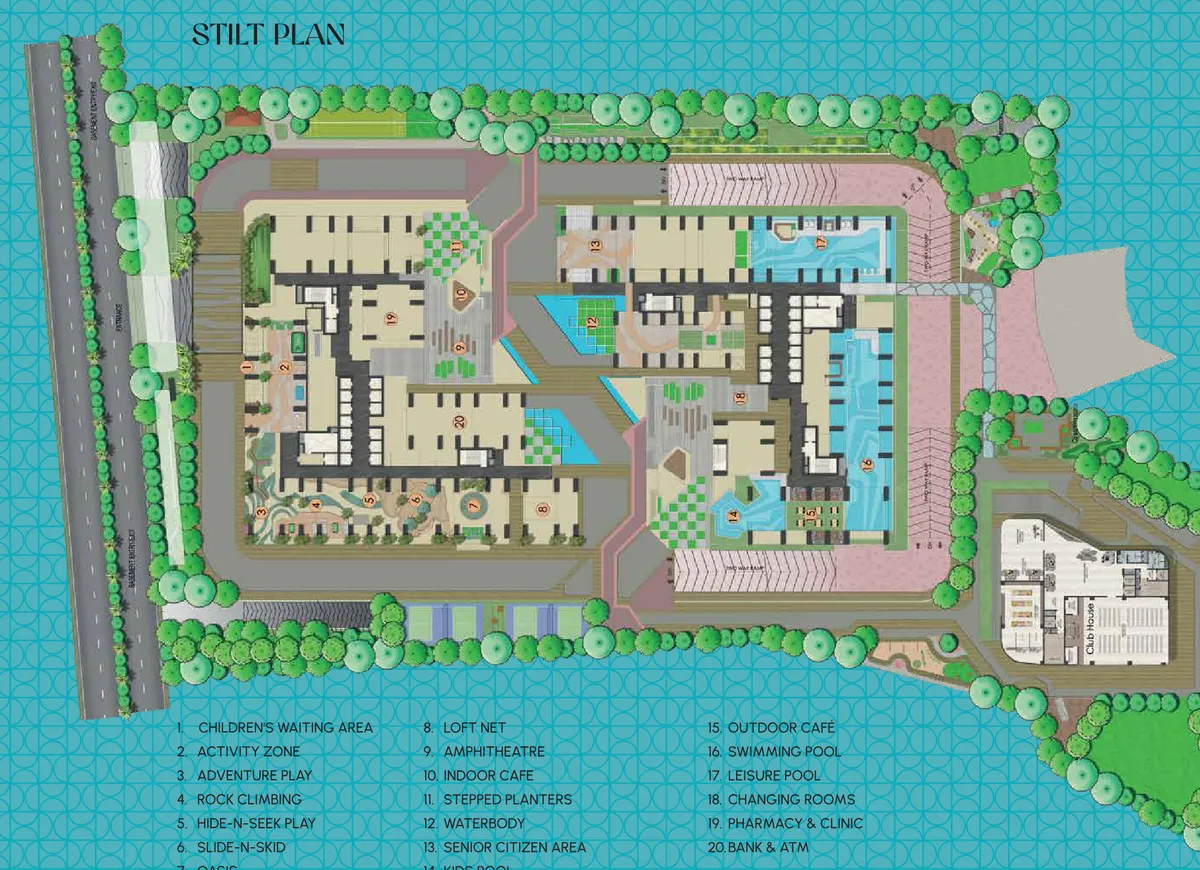
Reading the Raghava Nova master plan like a facilities manager
Most buyers glance at green blobs for landscaping and blue lines for pools, then move on. Slow down. The master plan is where you discover whether your future morning jog crosses active delivery ramps, whether kids cycle to the cricket net through a parking aisle, and whether the clubhouse banquet exit conflicts with resident vehicle egress during monsoon evenings.
Arrival and security zoning
Trace the path from main road to drop-off to lobby turnstiles. Count how many security checks a visitor passes before reaching your tower lift. Good plans minimise double backs; weak plans create daily friction for domestic help and elderly parents.
Service and waste
Locate garbage consolidation points relative to towers and playgrounds. Odour and leachate management matters in humid climates. Ask whether organic waste digesters or compactors are planned, and how many daily truck movements the layout assumes.
Stilt versus podium versus sky
Stilt layers handle high-frequency daily sports and pool use; sky levels handle aspirational programmes with lower duty cycles but higher safety training needs. Clubhouses handle celebration peaks. If one layer is overloaded in programming, noise bleeds into residences above unless slab isolation is engineered correctly.
Future plot context
Master plans sit inside larger urban fabric. Note blank parcels around the site boundary on city maps; they may become future towers that reshape wind or view. Ask the sales team for context height assumptions used in view studies.
How to use this page with site visits
Print a greyscale copy, mark three questions per zone, and walk the live site with a hard-hat if permitted. Photograph MEP shaft locations relative to your shortlisted tower footprint. Correlate those photos with this plan stack so memories stay anchored to drawings.
Closing
Master plan literacy turns Nova from a brochure fantasy into a lived community you can realistically navigate. Pair this reading with the location and amenities pages, then enquire with specific marked-up questions.
Stormwater and basement levels
Deep basements with multiple parking tiers need credible pump redundancy and generator fuel contracts. Ask how many hours of full load the estate can sustain during grid loss and whether sump pits are sized for intense Hyderabad cloudbursts.
Retail and daily convenience
If the master plan shows convenience retail at the edge, understand operating hours, delivery vehicle access, and whether noise from late-night outlets reaches lower-floor bedrooms.
Pedestrian safety for children
Draw imaginary lines from tower exits to play areas. If children must cross drive aisles, demand traffic calming features and sight-line mirrors at blind corners.
Clubhouse energy profile
Banquet halls and kitchens draw large HVAC and gas loads. Understand whether clubhouse utilities are metered separately and how their cost flows into maintenance budgets versus developer subsidy periods.
Tower separation and wind tunnels
Twin towers close together can create channelled wind at podium decks and pool areas. Ask whether computational fluid dynamics studies informed handrail heights, screen placements, and plant windbreaks.
Fire tender access
Verify loop road widths against local fire norms for your tower height class. Master plans can look spacious until temporary construction material stacks narrow turning radii during peak build phases.
Landscaped podium load
Heavy soil depths on structured slabs need drainage and waterproofing discipline. Ask about inspection galleries under planters if shown in detailed drawings, not only in artistic renders.
Phased handover risks
If any tower or parking wing can hand over earlier than others, understand how partial occupancy affects amenity access, security staffing, and whether you pay full maintenance for incomplete common areas.
Integration with city infrastructure
Note how storm drains tie into municipal networks at the plot edge. Blockages upstream during city-wide floods can still inundate basements if one-way valves or redundancy pumps are underspecified.
Sky bridge maintenance
Bridge links at height need periodic structural health monitoring, expansion joint care, and glass replacement logistics. Ask who owns cradle access routes for exterior cleaning at bridge façades.
Transformer and DG yards
Locate electrical yards relative to towers and pools. Acoustic berms, wall heights, and night-time DG testing protocols should appear in estate rules so new residents are not surprised during first grid failure drills.
Swimming pool structural stack
Pools on transfer slabs need waterproofing warranties longer than generic structure warranties. Ask whether leak-detection sensors or inspection hatches exist under pool shells.
Cycle and micromobility paths
If the plan shows cycling loops, verify whether they conflict with emergency vehicle paths and how scooters are charged if EV two-wheelers proliferate among staff.
Landscaping irrigation source
Large green decks need reliable non-potable water sourcing or STP reuse lines. Ask whether borewell dependence is planned and how groundwater compliance is maintained.
Security command centre placement
CCTV nerve centres should sit where operators can see both gatehouse feeds and tower lobby feeds without blind spots during shift changes.
Helipad and aviation easements
If any marketing sketch hints at rooftop landing infrastructure, verify aviation authority clearances and noise easements; they can constrain future crane operations during façade maintenance.
Boundary wall security
Perimeter intrusion sensors, electric fence segments, and camera overlap distances matter more than decorative stone cladding on compound walls.
Construction-phase buyer safety
During hard-hat visits, note how temporary barricades separate visitor paths from crane swing radii; disciplined sites usually translate into better long-term safety culture in the homeowners association.
Post-possession expansion joints in hardscape
Podium tiles over movement joints need replaceable detail; poor detailing causes trip hazards within the first monsoon cycle after handover.
Street frontage and noise berms
If the site fronts a busy arterial, check whether landscaped berms, acoustic walls, or building podium setbacks are dimensioned in plan rather than only illustrated in renders.
STP odour setbacks
Sewage treatment plants should sit downwind of outdoor dining and pool decks where possible, with maintenance paths that do not cross children’s play areas.
Loading docks for large moves
Ask whether furniture hoists or oversized lifts exist for penthouse-style deliveries if any duplex inventory appears later in sales phases.
Wayfinding for visitors
Large podiums confuse first-time guests; ask how numbering, colour bands, and digital kiosks will guide taxis from gate to tower without drivers calling you mid-trip.
Construction laydown areas
During build-out, ask where steel and glass pallets stage relative to future resident paths so you understand how much temporary chaos precedes the polished master plan render.
Keep a dated PDF archive of each master plan revision so later landscaping or podium shop insertions do not surprise you relative to the sales-stage drawing you memorised.
Share annotated master-plan PDFs with your interior designer only after you confirm they match the latest tower lobby revision issued to buyers.